MEET THE BOARD OF DIRECTORS.
The US Korean Rights Group (USKRG) is a non-partisan, grassroots movement founded in 2024 by a small group of like-minded volunteers living across the United States and North America. We are Korean Adoptees, professionals, family members, and activists participating in our communities with the belief that international adoptions to the United States should be conducted ethically, free from monetary incentives, and in full compliance with the UN Convention on the Rights of the Child.

YUH
President
Until mid 2022 Yuh believed she was just an ordinary orphan who was “lucky” to have been raised by a resourceful family and not in an orphanage. Obviously, she was reading the news about Korean adoptees and TRC but wasn’t quite ready to come to terms with the reality. Until one evening Yuh’s youngest son asked “Mom, would you ever stop looking if someone stole one of us?” At that moment, she realized she may be a victim of human rights violations herself. Yuh promised to do everything in her power to find her biological family and let them know she is alright. To do so, she agreed to start USKRG.
Even if it is not possible for Yuh to find her own truth, if her work with USKRG can help just one other Korean Adoptee finding their truth then it is worth it. A year into starting USKRG, Yuh is excited how we at USKRG are building a movement of adoptee voices. We are demanding truth, accountability and the rights to our heritage, records and identity.
Yuh’s drive to amplify voices and spark change is deeply rooted in her. In her student years she started an Amnesty International Chapter at her school in England, which led to a role as PR Coordinator for Amnesty International in the Copenhagen office. There, she used storytelling to shine a light on human rights issues and build campaigns that mobilized communities. Her career in film production for Locomotion, a production house under Nordic Film, further enhances her creativity and ability to communicate powerful narratives, using visual storytelling. Beyond her professional and volunteer ventures, Yuh is a dedicated mentor and advocate for underrepresented voices. She actively supports aspiring professionals by helping them finance their education, build careers, and find the confidence to share their stories with the world. With a unique blend of creativity, purpose, and heart, Yuh continues to inspire others—bridging design, advocacy, sustainability, and hospitality to build a more inclusive and regenerative future.
Yuh has lived in Denmark, England, Pennsylvania, California, New Jersey, Illinois, Hawaii & Panama. She currently splits her time between Chicago and Bocas Del Toro in Panama.

ROB
Vice President
Rob was told that he was born in South Korea and abandoned in a public location as an infant before being adopted at 2½ years old. His abandonment story is similar to many Korean adoptees’, as most of the time these stories were fabrications instead of reality. As part of his quest to uncover the truth not only for himself, but for all Korean adoptees, he became active in the USKRG.
After being adopted, he was raised in rural Minnesota, where he was among the few minorities in his community. Following high school, he pursued studies in engineering and later in computer science.
When Rob was 25, he returned to South Korea for the first time. This visit deeply influenced his understanding of his origins and first shed light on the fact that his adoption records might not be factually correct. Soon after, he became involved in supporting other Korean adoptees, guiding them through the challenges of adoption and helping them reconnect with their Korean heritage. Three years later, Rob moved to South Korea to immerse himself more fully in the culture and to deepen his connection to his roots. When that chapter came to a close, he relocated to the United Kingdom, where he spent two decades before returning to Minnesota, where he now lives with his wife and four children.
Rob is passionate about supporting Korean adoptees and helping them reconnect with their past. Through his work with the USKRG, he has the privilege of contributing to meaningful change by promoting transparency around our true adoption stories.

MICHELLE
Secretary
At around two years old, Michelle was adopted from Korea by a family in the suburbs of Pittsburgh, Pennsylvania. As far as she knows, she was born in Busan. Like many adoptees, she grew up in a predominantly white community where she longed to fit in but was constantly reminded that she didn’t.
As a child, Michelle’s adoptive father told her that her birth mother must miss her and that giving her up must have been incredibly hard. That belief brought her comfort until her early teens, when he told her instead that she had been found abandoned on the street. The idea that her life began not with a painful choice but with abandonment shattered her.
At 49, Michelle returned to Korea for the first time and felt a deep sense of belonging she had never known. She wanted to learn everything she could about her country and culture to reclaim what had been lost. That journey also led her to search for her birth family. When she requested her file from NamKwang Orphanage, she learned she had been found at Busan Station — perhaps lost, not abandoned. This crucial detail had been withheld from her adoptive parents.
Through this process, Michelle learned of the falsification of adoption records and corruption within the system. She realized that to truly know her story, she needed full access to every document connected to her past.
Michelle believes every adoptee deserves truth and transparency about their history. She also believes in the strength of the adoptee community to support, empower, and uplift one another. As a proud member of USKRG, she is committed to helping adoptee voices be heard and working together to create lasting, positive change.
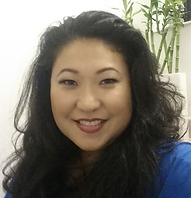
KELLY
International Operations
Kelly was adopted into a white family and community one month before her fourth birthday. Raised in Canada as the youngest and only girl in her family, she grew up in a predominantly white environment with limited opportunities to connect with other Asians. As more Koreans began arriving in her community during the 1990s, Kelly became increasingly aware of her differences, creating a complex and often challenging experience of navigating between two cultural worlds.
Her adoptive mother often shared accounts of her early life—stories of abandonment and being found with only her name and date of birth. However, official records presented conflicting information. Throughout her youth and into early adulthood, Kelly distanced herself from her Korean heritage, focusing instead on assimilation and belonging within Western culture.
In her mid-thirties, Kelly began a deeply personal process of self-discovery, seeking to uncover the truth about her adoption and identity. This period brought a wide range of emotions, from gratitude and love to frustration and loss, as she encountered systemic barriers in accessing her records and personal history within Korea.
A subsequent visit to South Korea, along with an interview conducted by a Canadian broadcast network, revealed new details that called into question many of the narratives she had been told throughout her life. These discoveries deepened her commitment to pursuing truth and accountability in intercountry adoption practices.
Driven by a strong sense of purpose, Kelly founded the Canadian Korean Adoptee Rights Group (CKRG) under the KRG umbrella, providing a platform for Canadian adoptees to access reliable information, share their experiences, and engage in global discussions about adoptee rights and reconciliation. She later joined USKRG to expand collaboration and contribute her skills and insights to the international adoptee community.
Kelly’s ongoing mission is to promote education, empowerment, and advocacy among adoptees. She works to ensure that adoptees have access to accurate information about their origins, enabling them to reclaim their identities and cultural heritage. Through persistent dialogue and coordinated efforts, she aims to help reform adoption systems worldwide—centering the lifelong well-being of adoptees, fostering transparency and accountability, and advancing reconciliation between adoptees and their countries of origin.

DAVID
Tech Director
David was adopted at three months old to a family in Florida in 1984 from Holt Korea through Catholic Charities. He spent most of his life uninterested in anything Korean due to feeling unwanted in Korea.
When he was 38, his liver started to fail and on May 1st, 2023 he had to go into surgery for a liver transplant. It was this near death experience that made him wonder where he was from and if he had any family that had any similar health issues. He began aggressively looking into everything Korean and contacted Holt to try and see if there was any more information to be had. He joined USKRG due to a passion to help other adoptees in their search for truth and decided to volunteer to assist with IT related needs to further this goal.
David works for the Florida Department of Health as a Systems programmer II, with multiple IT certifications such as A+, Network +, Security + , CySA +, SSCP.